Showing posts with label To. Show all posts

Tuesday, March 12, 2013

Tips to save fuel while you drive

Tips to save fuel while you drive

By  8 hours ago
Thinking about how you can better your car’s fuel consumption? Here are four simple tips to get you on your way to getting more out of your petrol and pennies!

1. Regularly check your tyre pressure
Keeping your tyres inflated is one of the most crucial things you should know for a better fuel consumption. Under-inflated tyres have more rolling resistance which means you need to burn more gas to keep your car moving. This will not only contribute to pollution, but will also increase fuel costs. Under-inflated tyres also make for longer stopping distances and can be very dangerous as they will have a higher tendency to skid on wet surfaces.
2. Slow down
Did you know that speeding will add a surprising amount to your fuel cost? Maintain a steady speed using the highest gear possible. The most efficient speed is typically around 45- 50mph. Driving faster than this will greatly increase your fuel consumption. Try to stick to the speed limit and do not go over or under it. Driving slower, braking earlier and accelerating slowly will not only make you safer on the road, but it will also save you money.
 3. Cut down the usage of air-conditioners
It is undeniable that some countries like Malaysia, with low air humidity, it is oven-like to drive without having to turn on the air conditioners especially during hot weathers. The solution is easy. Use it only when you need it. For example, morning and night time have higher air humidity, which means the air temperature outside is more cooling than the temperature inside your car. So you can turn off the air-conditioner, roll down your window and enjoy the cool fresh air outside. By doing this, you are not only doing yourself a favour, but Mother Earth as well!
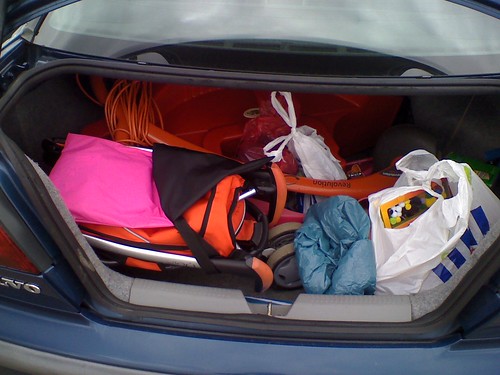
4. Travel light
Image courtesy of oklah.blogspot
Take some time to clean up and remove any excess t items that are not necessary inside your car. This will be helpful especially on hill slopes where you will need to press for more gas to gain a steady speed. By travelling light, you will also be helping protect the environment, as the less fuel you burn, the fewer emissions your car will produce.


Thursday, February 28, 2013

Guide: Mistakes to avoid when buying a used car

Guide: Mistakes to avoid when buying a used car

By  1 day ago
Photo courtesy of Motor Club of America
Investing in a new car is a grand decision, but buying a second-hand car can easily  just as interesting. However, it may require some buyer research to ensure that the investment in a used car is as worth the while as a new car. In aiding your decision making process, here’s our list of common mistakes you should avoid when buying a used car.
1. Choosing a specific model: Do you really need that Porsche?
You may be tempted into buying a model or a make that’s specific to your interest; for example, a classic Porsche that is finally within your reach. However, the car that you have in mind might deter you from getting a car that could probably fit you better. Primarily, identify your needs before deciding to buy a used car. Do you have a family? If so, then you might want to reconsider your Porsche for an SUV; maybe a Cayenne? Try to compare different cars and think of your actual needs before making a decision to buy a used car.
2. Skipping the research
Research matters especially when it comes to buying a used car. You should always check out your intended car purchase via car reviews available online, or even dig deeper into the finer details of such a car’s history to know if it has been into any accidents, endured floods or even been black listed by the JPJ. Always remember that research spent on used cars is just as important, or even more important, than when buying a new car.
Photo courtesy of RadioKerry
3. Managing your budget
An extensive check will be rewarding when looking at the value of a second-hand car. Various cars and models have different resale values. Please ensure that you know the resale value of your preferred car , so that you can avoid spending a substantial amount of money on an overpriced used car that won’t sell at a decent price later.
Prior to meeting with a car dealer, ensure that  your financials are balanced so that you can arrange the suitable financing terms and avoid agreeing to higher interest rates.
4. Forgetting a mechanic’s inspection
Apart from doing your research, never buy a used car based on its face value. Despite its good exterior, there may be hidden damage that can result in unnecessary repair and maintenance costs. When considering a used car, it is recommended to have a trusted mechanic check out the vehicle, inside and out, to see if the vehicle is actually in decent condition. A mechanic may also identify internal damages such as an exhausted engine or previous crash damage that you might have overlooked.
Photo courtesy of DealerShowcase.ca
5. Avoiding the test drive
It is important that you take your prefered used car for a test drive. By doing this, you can gauge on the performance of the car and the feel of the car when driving on different roads. Though the look is excellent from the outside, it might not run smoothly on bumpy terrain. Please consider taking time for a test drive to best ensure the safety of the car.
6. Ignoring the fine details
After all the inspections are done and all the finances are assured, you’ve decided to buy your car. And then, within a few kilometres of driving, you find that the power windows don’t work anymore. You take it to the mechanic and find out that the window’s motor is damaged. In the next few days, you can’t turn on your headlights.
With all that, just within the first few days of owning your used car, you would have already spent an extensive amount on repair and maintenance. Always be sure to check a used car thoroughly to avoid unnecessary costs upon buying it.
Photo courtesy of Total Car
7. Ignoring the safety features
Safety features in cars have become more comprehensive over the years. New cars are now filled with all kinds of gadgetry to keep you and your passengers safe; reverse cameras, six airbags, ABS, ESC, EBD, you name it.
But that doesn’t mean older cars don’t come equipped with the same of the same safety devices. Airbags have been fitted to cars since before we can remember, and reverse sensors have long been around before reverse cameras got to production.
Be sure to find a car that has as many safety features for modern-world driving and safekeep your passengers with your used-car purchase!
8. Failure to compare the prices
The methods used for buying used cars have changed since the advent of the Internet. You can now go to Carlist.my to make comparisons between almost every available car out there. So while you can do this as easily as possible, why not, right? Go on then. Take your time, compare your prices, find the kind of car that will work for you, and pay the best possible price for it; no more!

Thursday, February 7, 2013

Using Neuroscience To Improve Your Training Experience

Using Neuroscience To Improve Your Training Experience

Use Neuroscience to Improve Training Experience

By MET UK Faculty: Phil Wilde

phil@metmethod.com
At MET we’re passionate about our mission- we show trainers, coaches and physical movement specialists how to inspire fitness and change lives. Central to our strategy and a huge focus of our Level 1 coaching certification is the use of the latest neuroscience research to synchronise the brain and body in movement.

What can neuroscience add to the skill set of the trainer, coach or physical movement specialist? That is a question we hope to answer over the course of a series of blogs that will cover some of the fundamental neuroscience concepts and what it means to the work you do with your clients, athletes and teams.

A Brain of 2 Halves


Let’s start with some basics on function- brain function. We’re going to focus on two of the big players in the brain and their sometimes conflicted interaction with each other.

The Pre-Frontal Cortex:

The PFC is your brain’s equivalent of the board room. It’s the area of executive function, where the big decisions happen and where new or difficult tasks are co-ordinated before we commit these skills to memory. This part of the brain is what is theorized to have developed at an accelerated rate to allow us to develop more sophisticated thought processes than other species in the great evolutionary race to the top.

The Limbic System:

Often referred to as the caveman, or PRIMAL brain. The limbic system is a collection of different components that serve to act as your brain’s panic station. It was the limbic system that kept us safe from predators and other threats thousands of years ago in our primal surroundings. Even in our relatively safe modern world, this part of your brain still subconsciously scans your surroundings for threats up to 5 times per second!

So on the one hand we have a very civilized, rational portion of the brain and on the other we have a deeply instinctive, impulsive and often very risk averse area of the mind. These polar opposites interact through ascending and descending pathways. In a split second, the limbic system processes all of the external and internal stimuli from any given set of circumstances we find ourselves in and cross references this information with our memory bank to drill down on two key questions:

  1. Going by past experiences, are there any risks or threats to be wary of?
  2. If the answer to question 1 is no, are there any prospects of rewards (food, shelter, sex or in the modern world, financial gain)?

When the limbic system senses a threat, it sounds the alarm and signals to the PFC that action is required (the ascending pathway). This is often felt as the sudden swell of emotional urge that we sometimes experience and the limbic system will prepare a response to these feelings- pending approval from the board room.

The PFC, in its executive function, will either give the go ahead or, as is often the case inhibit the emotional response and ‘rationalise’ with the jumpy limbic system (the descending pathway). The problem with this relationship is that the channels heading up are believed to be 5 times greaterthan those going down- the PFC has limitations on its ability to override the panic station. The long and short of it is this- the impulsive and emotional limbic system will have a huge bearing on movement, performance and behavior.

The task for the coach then becomes managing the negative emotional responses to get less inhibitions and better performance, or, synchronizing the body and the brain.

How? Here are some basic suggestions that we cover in more detail on MET Level 1…
  1. Be aware of the sensory input the limbic system will be scanning for when assessing for threats- learn your client’s triggers. What surroundings are they more comfortable in? How can your coaching cues create a different response? Rather than repeat one set of verbal instructions over and over without improvement in performance (‘flex the hips and load up your glutes’), take a different approach (‘sit backwards as if taking a seat’)
  1. Exercise Complexity- think about your client’s comfort zone in relation to movements that the brain finds familiar. Anytime we introduce new exercises, the PFC has to co-ordinate the activity to learn proper movements. If the complexity of an exercise goes beyond the skill of the client, the PFC can’t manage all of the information and we get negative emotional interference from the limbic system. Use your progressions wisely- this is a key aspect of MET Level 1 certification and why MET coaches will work through progressive zones of exercises
  1. Exercise Order- When introducing new variations on exercises, give some thought to what stage of the workout that introduction occurs. Remember new movements need PFC involvement and the PFC needs oxygen and glucose to function properly- both of which are in shorter supply in the latter stages of a workout.

For more information on the M.E.T Method in the UK, please connect with Phil:
Phil@METmethod.com
Facebook: MET Method UK